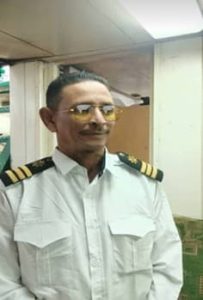
Mohammed Omar Hakami Za’eem was a 53-year-old worker at al-Salif Port, Hudaydah Governorate. He was married with six children – three sons and three daughters.
On the early morning of 19 December, around 3am, Israel Defence Forces began targeting al-Salif Port with airstrikes. Mohammed was asleep on board a tugboat at the port, alongside several colleagues, when the shelling began. Their boat was directly hit by one of the strikes. Seven workers, including Mohammed, were killed.
Nashwan Omar, Mohammed’s brother, recounted the moment he first learned of the incident:
‘I received a call on Thursday morning from Mohammed’s son—something that doesn’t usually happen. He asked me, “Where are you? When will you be home from work?” I asked why, and he replied, “My father has died!” Hearing those words, it felt as if the world went dark before my eyes. I couldn’t process the news—I was in shock. Even my colleagues at work began offering their condolences, but I just couldn’t accept their words.’
He continued:
‘I contacted one of my brother’s coworkers and asked him what had happened. He told me Mohammed had been on board the tugboat with his colleagues when it was targeted by the strike. Some of them managed to jump into the sea. He said my brother had been sleeping at the time of the attack, and likely didn’t have a chance to escape. At that point, I couldn’t handle the shock—I fainted on the spot.’
The bodies of Mohammed and some of his colleagues were recovered from the sea two days after the attack. They were laid to rest in a funeral held on 21 December.
Nashwan remembered his brother as a man who worked tirelessly to support his family:
‘He was neither a criminal nor an aggressor—he was peaceful and well-loved. He never harmed anyone in his life. Every time I think of him, I break down in tears. A brother is irreplaceable, and Mohammed was not only our brother—he was like a father and a pillar of strength for all of us.’