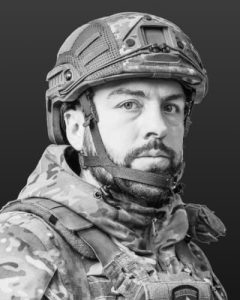
Junior Sergeant Dmytro Muzyka, known by the call sign ‘Anubis’, was killed in action on 1 July during a combat mission as a result of Russian shelling near the town of Krasnohorivka, Donetsk region. He was 31 years old.
Dmytro was born in the village of Kovalivka, in Mykolaiv region, and later lived in the village of Popivka, Vinnytsia region. He graduated from Vocational Technical School No. 14 in Voronovytsia and worked as a roofer. He defended Ukraine’s independence during the Anti-Terrorist Operation.
On the eve of the full-scale invasion, Dmytro was working abroad in the Czech Republic, but he returned immediately and on 4 March joined the Armed Forces of Ukraine. He served in the 59th Separate Motorized Infantry Brigade as a vehicle commander in the observation platoon of a reconnaissance company.
At first, Dmytro took the call sign ‘Mykyta’ because, like the main character of the fairy tale The Painted Fox, he was clever and always able to find a way out of complex and dangerous situations. When his call sign became recognizable to Russian forces, he changed it to Anubis – the ancient Egyptian guide to the realm of the dead.
For his distinguished service, Dmytro was awarded the Presidential distinction ‘For Participation in the Anti-Terrorist Operation’, the medals ‘For Bravery’, ‘Defender of the Homeland’, and ‘For Wounds’, as well as the distinction ‘For Service to the State’ and the Order ‘For Courage’ (3rd Class).
His wife Maryna wrote:
‘Dima was brave and fearless – the kind of man who never gives up. Even if something didn’t work out, he would come back and try again until he succeeded. He was the one who taught me determination and faith in myself. He always smiled, even after the hardest missions, and reassured me that everything would be fine. I am proud of him for being who he was: courageous, intelligent, honest, wise, and devoted. I love him, always and forever.’
Dmytro leaves behind his wife, parents, and sister. He was buried at Mishkivske Cemetery in Mykolaiv, and a memorial plaque was installed on the facade of the school in his village of Popivka.